The address gets you close.
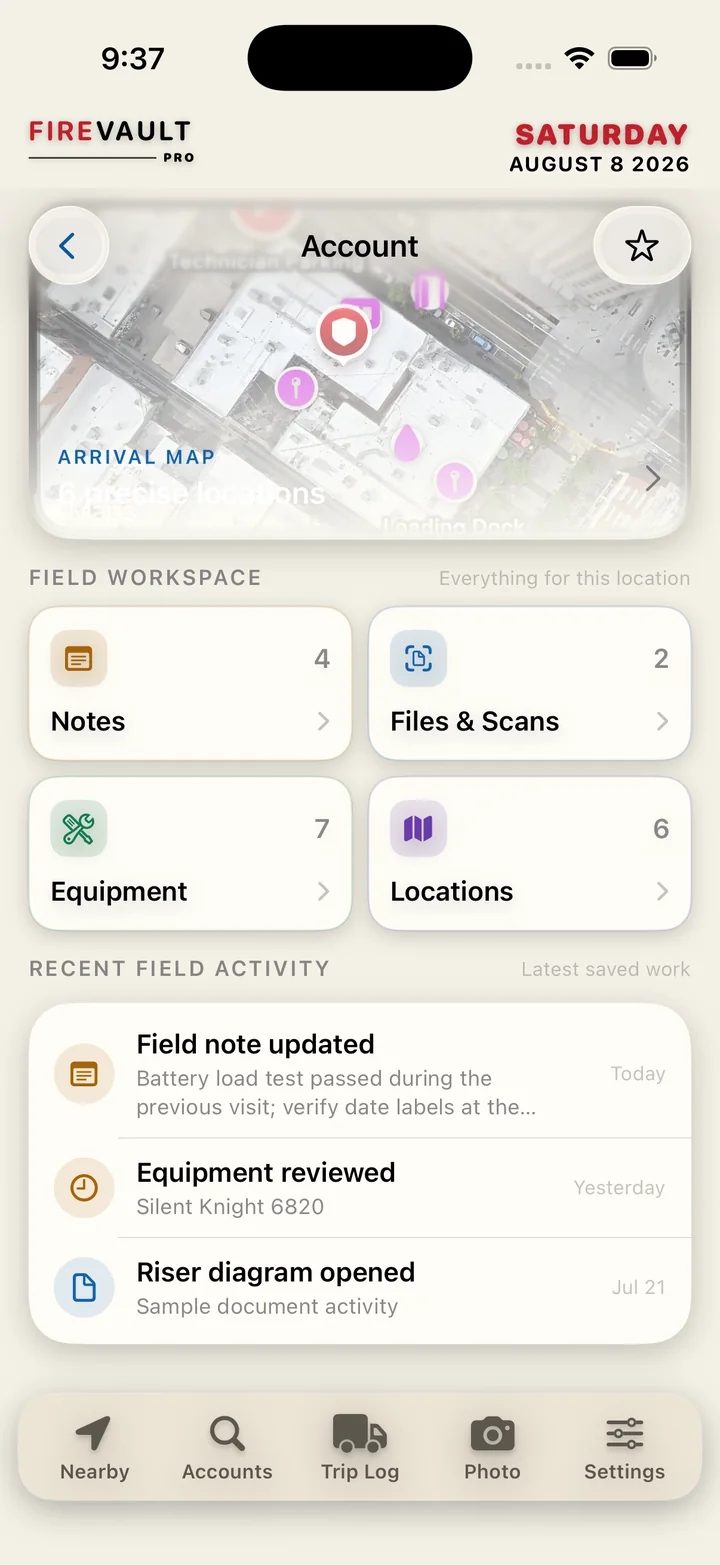
FireVault keeps entrances, panels, riser rooms, parking, and other practical location details attached to the account.
FireVault keeps account knowledge, verified locations, photos, notes, travel history, and reports connected to the work—so technicians spend less time reconstructing yesterday.
The most useful details are often scattered across memory, camera rolls, paper notes, map pins, and company systems that were never designed for the person standing at the panel.
FireVault keeps entrances, panels, riser rooms, parking, and other practical location details attached to the account.
Photos, scans, notes, equipment details, and known conditions remain organized for the next visit.
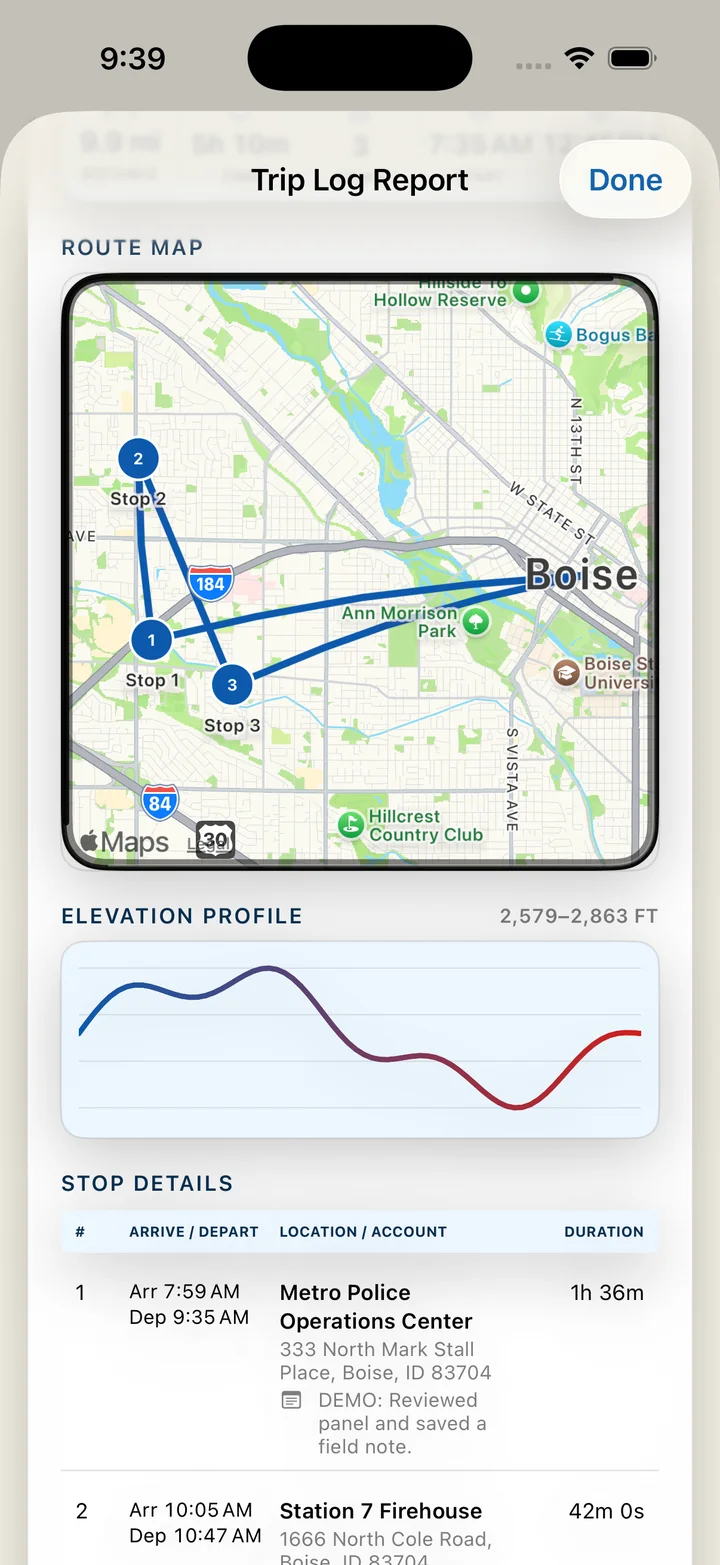
Route history, stops, timestamps, and records become more useful when they stay connected to the work that created them.
FireVault is organized around the technician’s day—not around a manufacturer, office department, or disconnected feature list.
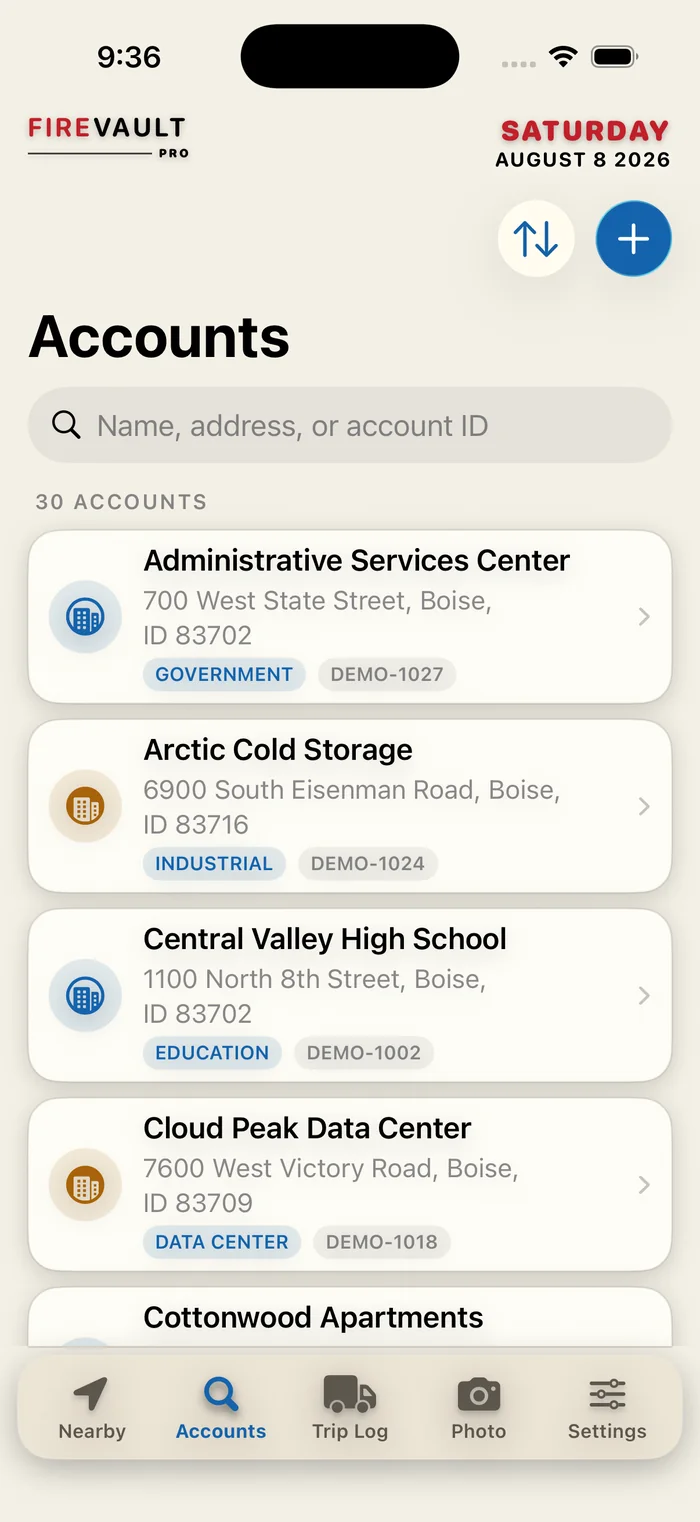
See accounts by distance, open the right location, call the site, or start directions without rebuilding context from scratch.
Browse real FireVault screens and see how each view reduces the amount of searching, remembering, and re-entering required in the field.
Map context, distance, contact, and navigation actions stay visible without turning the screen into a dispatch console.
FireVault brings together the field record while keeping each workflow focused and understandable.
Keep map position, practical access details, and the account record working together.
1550 River Street
Boise, ID 83702
Keep account identity, technician notes, evidence, stops, and timestamps connected in one exportable story.
FireVault is being built to organize mixed-account environments without forcing every note, photo, and process into one manufacturer’s ecosystem.
FireVault’s product direction separates public presentation, authenticated access, cloud storage, and protected server-side services.
Read privacy direction ↗Technicians can continue working when connectivity is unreliable.
Authentication and row-level data rules remain part of the platform design.
Private API credentials belong behind protected functions—not inside the public website or app bundle.
Connected, offline, pending, and unavailable states should be understandable rather than hidden.
Create a FireVault account to receive product updates and future testing information as the beta expands.
FireVault is still under active development, so the website distinguishes product direction from completed launch availability.
No. FireVault is designed as a manufacturer-neutral field workspace for mixed account and equipment environments.
No. The product is intended to complement company systems by preserving technician-facing account knowledge and field evidence.
The product direction is offline-first so important field workflows remain useful in basements, mechanical rooms, and weak-signal locations.
Not yet. FireVault is in active development and private beta preparation. The website will be updated when broader testing or release becomes available.
Location should be collected only for clear field workflows, with visible status, user control, and a final reviewed privacy policy before public launch.